


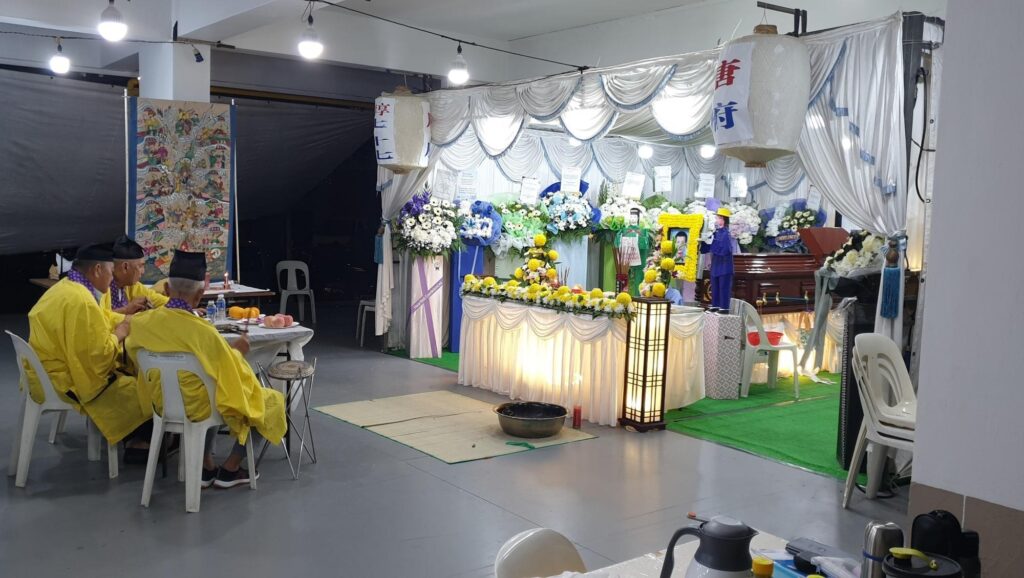
Family members and friends come together at a Chinese funeral wake to remember the person who has passed away. People experience more than sorrow, as they encounter something that goes beyond grief.
The practice serves as a way to show respect while supporting the family and upholding traditional customs. The wake serves as the main farewell ceremony across Asia and holds special significance for Chinese families in Singapore. The event brings together traditional customs, religious beliefs, and social bonds in a shared setting.
This guide explains what a Chinese funeral tradition is, why it matters, and what usually happens during this time.
What Is a Chinese Funeral Wake?
A Chinese funeral wake is a period where the body of the deceased is placed in a coffin and kept at a suitable location for several days. During this time, family members, relatives, and friends visit to pay their respects.
The wake often lasts between three and seven days. The number of days may depend on beliefs, family choice, or practical reasons.
Unlike some cultures where funerals take place quickly, the Chinese wake allows time for:
- Mourning
- Paying respects
- Performing rituals
- Gathering loved ones
It is both a private and social event. People come not only to grieve but also to support the family.
Why Is the Wake Important?
The wake holds deep meaning in Chinese culture. People observe this ritual to show respect to their ancestors, while believing that proper ceremonies will guide the soul towards eternal peace.
Honour and Respect
The wake serves as the final opportunity for families to honour and care for their loved ones. During this time, family members take responsibility for both practical arrangements and religious ceremonies, ensuring everything is carried out with respect and dignity.
Family Duty
The responsibility to handle these arrangements falls on close family members who remain involved throughout the process. The practice of filial piety shows that children continue to respect their parents after death by performing specific funeral ceremonies.
Community Support
The wake functions as a gathering space, allowing friends and distant relatives to visit and express their condolences to the bereaved family.
In the context of Chinese funerals in Singapore, this support is even more visible, as wakes are often held in shared spaces where neighbours and community members can take part.
Where are Chinese wake traditions held?
The location of a Chinese funeral ritual depends on tradition, space, and modern living conditions.
At Home
In the past, wakes were often held at the family home, allowing the deceased to remain close to loved ones.
Public Spaces
In cities like Singapore, wakes are often held in:
- Void decks
- Funeral parlours
- Community halls
This shift reflects urban living, where space is limited.
Funeral Halls
Some families choose dedicated halls for comfort and convenience. These spaces are designed to accommodate visitors and rituals.
Setting Up the Wake
The setup of a Chinese funeral wake follows certain customs, with each element carrying meaning.
The Altar
An altar is placed near the coffin. It usually includes:
- A photo of the deceased
- Candles
- Incense
- Offerings such as food or fruit
The altar is where visitors pay their respects.
The Coffin
The coffin is placed in a central position. It may be open or closed, depending on tradition and family choice.
Mourning Colours
White is the main colour used during mourning, symbolising grief and purity.
Family members often wear:
- White clothing
- Black or dark colours
Bright colours, especially red, are avoided.
Rituals During a Chinese Funeral Customs
The wake requires participants to perform ritual activities. People follow different customs based on their religious beliefs, but they observe similar rituals.
Burning Incense
Visitors show their respect through lighting incense sticks and bowing. This practice creates a connection between those on earth and the departed who have passed away.
Offering Food and Paper Items
Food is placed at the altar as an offering. Some families also burn paper items, such as:
- Paper money
- Paper houses or clothes
These items are believed to provide comfort and support for the deceased in their journey in the afterlife.
Chanting and Prayers
Monks and priests are sometimes invited to perform chanting prayers during specific events. Ritual practices at Buddhist funerals in Singapore focus on helping the spirit find its path to peaceful rest.
Night Vigils
Family members stay close to the coffin throughout the night. This practice shows spiritual commitment and allows the deceased to remain accompanied by loved ones.
What Happens When You Visit a Wake?
If you attend a Chinese funeral ritual, it helps to know what to expect.
Paying Respects
You will be guided to the altar, where you may:
- Light incense
- Bow three times
- Observe a moment of silence
Giving Contributions
Guests often give condolence money in an envelope to help the family cover funeral costs.
Etiquette to Follow
Respect is the most important rule at a wake. The following etiquette guidelines should be observed:
Dress Modestly
Wear simple, muted clothing and avoid bright colours and flashy styles.
Speak Softly
Keep your voice low as the environment is solemn.
Follow Instructions
If unsure, observe others or follow guidance from the family or staff.
Avoid Certain Actions
- Do not take photos
- Do not joke or laugh loudly
- Do not wear red
These actions may be seen as disrespectful.
Role of Religion in the Wake
Chinese funeral traditions combine multiple religious beliefs, as they do not follow a single tradition.
Buddhist Influence
At Singapore Buddhist funerals, monks perform scripture chanting and lead prayers to help the soul find its way to peaceful rest. The ceremonies focus on guiding the deceased peacefully while preserving their dignity.
Taoist Practices
Taoist rites involve symbolic actions that help remove obstacles while protecting the path of spiritual transition. The practice includes prayers, chants, and ritual physical movements.
Traditional Beliefs
People follow various customs rooted in folk traditions, including paper offerings and ancestor worship practices. Most wakes combine these elements to reflect personal beliefs and ancestral customs from family heritage.
The Final Day of the Wake
The final day of Chinese funeral practices leads to the funeral service and burial or cremation.
Closing Rituals
Final prayers and offerings are made, and family members gather for a final farewell.
Funeral Procession
The coffin is transported to the burial or cremation site. In some cases, a procession takes place.
Post-Funeral Practices
After the funeral, families may continue observing mourning customs for a set period.
How Chinese Funeral Funeral Have Changed
Shorter Wakes
Today, many families choose shorter wakes due to busy schedules and limited space. Traditional wakes used to last seven days, but today many funerals last around three days. This allows families to plan more flexibly while still preserving important customs that remain meaningful to them.
Professional Support
Funeral experts now handle all funeral arrangement duties, including event planning and ceremonial execution. This helps reduce stress for families, allowing them to focus on their customary duties without being overwhelmed by arrangements.
Urban Adaptation
In a Chinese funeral in Singapore, wakes are held in urban spaces such as void decks or halls, while still preserving meaningful practices.
Common Misunderstandings
There are a few misconceptions about Chinese funeral practices.
It Is Not Only for Family
Friends and acquaintances are also welcome to attend and pay their respects.
It Is Not Only the Religious
Even non-religious families may still follow cultural customs.
It Is Not Rigid
While traditions are important, families may adjust practices based on personal choice.
Why the Wake Still Matters Today
Even with modern changes, the wake remains important.
It offers:
- Time to process loss
- A way to honour tradition
- A chance for community support
The Chinese funeral customs continue to bring people together during a difficult time.
Final Thoughts
Overall, a Chinese funeral wake functions as a ceremonial event that creates an environment which combines traditional practices with families’ need for respect and personal connection.
The ceremony serves its purpose whether it takes place in residential or urban settings, including Chinese funeral services in Singapore. Family members can find closure through this process while supporting one another during the farewell period and showing respect for the deceased.
Understanding these traditions helps people approach the experience with respect and confidence when participating. Respect becomes especially important during times of loss, as it provides comfort and support throughout the grieving process.